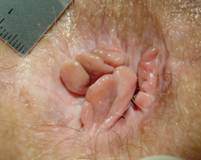
Tag Archives: Rectal lump

How Many Times can You Have the Rubber Band Ligation Treatments | Minnesota

Rubber band ligation (RBL) is one of the common procedures to treat hemorrhoids. RBL is an office procedure that mainly treat the prolapsed hemorrhoids in the advanced grade 2 and grade 3 hemorrhoids.

RBL is very effective in treating hemorrhoids, but it is not very efficient because RBL treatment is usually limited to one hemorrhoid each office visit and additional areas may be treated at 2 week intervals. Most patients need 2-4 RBL sessions. The patients will have more rectal discomfort, rectal tenesmus (feeling of incomplete defecation), and pain if given the RBL in two locations at the same time.

The hemorrhoid tissue has to be prolapsed enough to be tied off at its base with rubber bands, so it cannot be performed if there is not enough tissue to be pulled into the barrel in the banding device. This procedure is almost never appropriate for grade 1 or mild grade 2 hemorrhoids. The infra-red coagulation (IRC) is the better option for early and mild hemorrhoids.

The RBL process involves a doctor inserting an anoscope into the anus and grasping the prolapsed hemorrhoid with a long clamp to place a rubber band around its base. With the rubber band in place, the hemorrhoid dies off in a few days or a week. The procedure is done in a doctor’s office and only a couple of minutes.

After the procedure, some patients may feel tightness, mild pain or have the feeling of bowel movement. Most patients are able to return to regular activities (but avoid heavy lifting) almost immediately. If you feel some pain after banding, you may use Tylenol or Ibuprofen as needed and do a lot of Sitz bath to relieve discomfort. Some patients may have slight rectal bleeding in a week. If you notice significant rectal bleeding, then you should call your doctor’s office.

Proctalgia Fugax Means “Fleeting” Rectal Pain | Minneapolis & St Paul

8%-18% of people have it. And of those people, only 20-30% seek a professional diagnosis for it. Patients suffer from episodes of severe pain that can make it difficult to function in their daily lives. What is this mysterious ailment?

Proctalgia fugax is the answer. Proctalgia fugax, fugax meaning “fleeting” in Latin, is a condition that causes severe episodic pain in the anorectal area caused by cramps in the levator ani, the main pelvic floor muscle. Attacks typically occur at night and are often mistaken as an urge to defecate. When the levator ani spasms, the result is anorectal pain lasting anywhere from a few seconds to 30 minutes. Men may even get an involuntary erection! This condition typically starts around the age of 45. While it does not cause physical damage to the body, proctalgia fugax can be very painful and debilitating.

Proctalgia fugax cannot be cured, but its symptoms can be managed. Here’s a list of some of the many treatments that can help ease the pain during an attack:
1. Warm baths
2. Warm enemas
3. Cold packs
4. Relaxation techniques
5. Salbutamol inhaler – Usually used for bronchitis, salbutamol inexplicably seems to shorten episodes of pain
6. Botox – Inhibits acetylcholine, the neurotransmitter that controls muscle, which reduces contractions
7. Topical calcium channel blockers – Vasodilates blood vessels, reduces muscle contractions
8. Counseling – Stress can be a major trigger of proctalgia fugax. Eliminating stress may reduce the frequency of attacks.
9. Galvanic stimulation – High voltage stimulation has been shown to reduce frequency of attacks
10. Treatments of the underlying diseases, such as hemorrhoids and anal fissures.

Overall, proctalgia fugax can be a real nuisance. The 8%-18% figure above may be even greater in reality because so few people seek treatment. And it’s understandable why people don’t- it’s an uncomfortable and embarrassing thing to talk about. Many will just try to ride it out. Proctalgia fugax can be a struggle. It’s not worth the loss in quality of life. If you feel that proctalgia fugax is making your life worse, it might be time to see your doctor.

Rectal Examination Process in Hemorrhoid Care | Minnesota

Anorectal assessments include visual inspection, palpation, digital rectal examination and anoscopic examination. The patient typically lies sideway on his or her left side with the patient’s knees flexed toward the chest (left lateral decubitus position), which is allows comfort for the patient as well as good visualization and access for the examiner.

The doctor usually inspects the entire perianal area first. It is common that patient apprehension is great before any anal examination, and you may slowly take deep breath and try to relax. The doctor gently spread your buttocks to allow easy visualization of anus.

The doctor often the following signs by simple inpection.
1. Redundant tissue
2. Skin tags, anal polyps, and anal cancer
3. External hemorrhoids
4. Anal warts
5. Fissures and fistulas
6. Signs of infection or abscess formation
7. Rectal or internal hemorrhoidal prolapse.

The digital exam is to palpate any suspicious mass lesion in the anorectal canal. Because internal hemorrhoids are soft vascular structures, they are usually not palpable unless thrombosed. The prostate in men is palpated during the rectal exam.

anoscopeAnoscopy is a simple medical procedure that can help your doctor identify an abnormality in your anus and distal rectum.

To perform an anoscopy, your doctor will insert a device called an anoscope into your anus. This scope is typically 3-4 inches long, made of plastic or stainless steel . An anoscope allows your doctor to get a detailed look at the tissue within your anorectal areas.

Anoscopy is to confirm the diagnosis of hemorrhoids, severity of hemorrhoids, anal fissure and other anorectal diseases.

Three KEY BENEFITS OF INFRARED COAGULATION THERAPY FOR INTERNAL HEMORRHOIDS | Minneapolis & St Paul

Many Americans experience hemorrhoids. The exact prevalence is unknown because most patients are asymptomatic and do not seek care from a physician. It may affect approximately half the population by the age of 50. Hemorrhoids are more prevalent in persons 45 to 65 years of age.

Although the precise cause is not well understood, hemorrhoids are associated with intrinsic weakness in rectal hemorrhoidal tissues with conditions that increase pressure in the hemorrhoidal venous plexus, such as straining during bowel movements secondary to constipation. Other risk factors include obesity, pregnancy, constipation, chronic diarrhea, anal intercourse, and pelvic floor dysfunction.

Hemorrhoidal size, location, and thrombosis, determine the extent of pain or discomfort. Internal hemorrhoids, proximal to the dentate line, are traditionally graded from I to IV based on the extent of prolapse. External hemorrhoids and anal tags, distal to the dentate line, develop secondary to internal hemorrhoids or result of thrombosis.

The ideal treatments for early stages of internal hemorrhoids are always debated. Some are more effective but are more painful, others are less painful but their efficacy is also lower. Thus, comfort or efficacy is a major concern.

Medical management (e.g., stool softeners, topical over-the-counter preparations), dietary modifications (e.g., increased fiber and water intake), and behavioral therapies (good toilet habit, sitz baths) are the mainstays of initial therapy.

If conservative management is unsuccessful, office-based, non-surgical treatments of grades I to III are the preferred next step and the common treatment options include infra-red coagulation and rubber band ligation. The studies showed that band ligation, although more effective in controlling symptoms and obliterating hemorrhoids, is associated with more pain and discomfort to the patient. As infrared coagulation can be conveniently repeated in case of recurrence, it could be considered to be a suitable alternative office procedure for the treatment of early stage hemorrhoids.

Excisional hemorrhoidectomy leads to greater surgical success rates but also incurs more pain and a prolonged recovery than office-based procedures; therefore, hemorrhoidectomy should be reserved for recurrent or higher-grade disease.

3 KEY BENEFITS OF INFRARED COAGULATION THERAPY FOR INTERNAL HEMORRHOIDS

Infrared coagulation is quick and near painless
Infrared coagulation can reduce or eliminate the hemorrhoid with a series of a few quick and near painless treatments using short bursts of hot light.

The primary benefits of infrared coagulation are the quick and near painless treatments. While a series of 3 or 4 treatments is normally required over a 2 month period to reduce hemorrhoid, the individual treatments only take a few minutes, and require no recovery time. This is a big perk compared to taking several days off for surgery and recovery, which can be required in the most severe cases.

Infrared coagulation is nonsurgical

While many people associate hemorrhoids with painful surgery, only a small percentage of patients actually require surgery. Hemorrhoidectomy is a surgical procedure to remove most severe hemorrhoids. Instead, infrared coagulation, or other nonsurgical treatments, can reduce or eliminate the source of a hemorrhoi. The treatment is performed right in the office with no anesthesia, incisions, or stitches.

Infrared coagulation is effective
Nonsurgical treatments are simple, quick and convenient, but they must also offer a certain level of effectiveness. To that end, infrared coagulation is up to 95% effective.
If you’d like to see how infrared coagulation can help you, give Procedure Clinic a call today at (952) 922-2151 to schedule a consultation. You can enjoy lasting relief from hemorrhoid pain!

The External Hemorrhoidectomy Recovery Process

What happens afterwards? The External Hemorrhoidectomy Recovery Process.

If you’ve only local anesthetic was used, you’ll be able to go home right after surgery. Most external hemorrhoidectomies are performed under local anesthesia without any sedation. If you have large external hemorrhoids or mixed hemorrhoids, you may be given oral or intravenous sedation, and you leave once the sedative wears off, you need to arrange a driver . General anesthesia is typically unnecessary for external hemorrhoidectomy.

Following an external hemorrhoidectomy, the recovery should involve a little time off work (a couple of days), and avoiding intense physical strain; that said, it is important to try to remain active while you recuperate.

Pain management after an external hemorrhoidectomy is important part of recovery. Your bowels still need to keep work while recovering, except now it has a wound in it. It is almost certainly going to be quite sore at first.

Most patients go through bowel preparation before surgery, and as a result usually don’t have any bowel movements in the first day or even 2nd day. You should reduce the amount of food you eat in the first 2 days in order to reduce the bowel movements. You’ll also get some fiber and medication to soften your stool, allowing you to pass it more easily and with less disturbance to the operative wounds. For similar reasons, you should make sure you drink plenty of water, at least 6 to 8 glasses every day. This also helps keep your stools soft and easy to move.

Tylenol or Ibuprofen is usually sufficient for pain control. If the pain is severe, stronger painkillers such as narcotics may help keep it in check. That said, you are discouraged from using them since narcotics may cause constipation, which affects the wound healing.

It is also important to give yourself a Sitz bath three times a day, 15 minutes each time to help the wound healing and prevent infection. Wash or soak after each bowel movement, and Keep the anus clean and dry.

The pain ought to lessen as the wound heals over, which is a fairly fast process – everything should be back to normal, and pain-free, within two to three weeks.

Do I have Internal or External Hemorrhoids? | Minnesota

You’re might be reading this because you saw blood on your toilet paper. Or maybe it was because it’s so itchy down there and it makes your life a living hell in public, or even worse- it hurts when you have a bowel movement. Well, you and 75% of the population are or will be wondering the same thing. Most likely, you have hemorrhoids.

Now, you probably want to know more about them. It’s your body, after all. Essentially, there are three types of hemorrhoids – internal, external, and mixed, which are usually the result of intrinsic weakness of local hemorrhoid tissue with other factors, including excessive or prolonged straining, pregnancy, constipation, heavy lifting, or just unfortunate genetics.
Internal hemorrhoids form above the dentate line, while external hemorrhoids form below the dentate line. Mixed hemorrhoids can either refer to lesions formed at the dentate line, or to the presence of both internal and external hemorrhoids. Luckily, all of them can be treated fairly easily in a clinical setting.

External Hemorrhoids
External hemorrhoids are pretty easy to figure out when you feel bulges or bumps around the anus. It usually affects the cleansing after the bowel movement and cause the skin irritation and itching. The thrombosed external hemorrhoids occur if the varicose veins rupture and the blood clots develop, it is often accompanied by severe pain and swelling. Lots of people can self-diagnose external hemorrhoids, but a doctor’s visit is required to make sure since there are several other medical conditions look similar to external hemorrhoids, such as anal warts, sentinel pile of anal fissure, anal polyp and anal cancer.

Internal Hemorrhoids
Internal hemorrhoids, while not as apparent as external hemorrhoids, are far more common. It is the root cause of hemorrhoid disease. In fact, they are so common that 100% of the population has them. Normal hemorrhoidal tissue is actually a physical part of your body, not an affliction. They only become a problem once the connective tissue around it weakens and the veins become swollen.

For many, the only sign of internal hemorrhoids might be bleeding. As the hemorrhoid grows, it may become prolapsed, which is certainly not a pretty sight. This means the hemorrhoid is bulging out of the anus. Prolapsed hemorrhoids will be pretty obvious and can be painful and itchy. They can often be pushed back in manually if they aren’t too big. Note that external hemorrhoids and internal prolapsed hemorrhoids are not the same thing, but many patients with external hemorrhoids also have internal hemorrhoids, and your doctor will be able to tell you which it is if you aren’t sure.

Ten Ways to Temporarily Alleviate Symptoms of Hemorrhoids | Minneapolis & St Paul

You come home one day and in the bathroom you notice blood on the toilet paper after you wipe. It might hurt, and it might be itchy, and, like most adults, you probably haven’t been meeting your daily requirement for fiber lately. If you tick all these boxes, well, congratulations! You probably have hemorrhoids! and you should call your doctor’s office to make an appointment for the evaluation and treatment, especially when you have rectal bleeding. While you wait for your doctor’s appointment, you can start treating the rectal symptoms by yourself to temporarily alleviate the hemorrhoidal symptoms.

1. Keep the area clean and dry. Do not wipe or rub vigorously.
2. Take sitz bath in warm water for 15-20 min, 2-3 times a day and after every bowel movement. Sitz baths will help relieve discomfort and clean the area.
3. Good toilet habits: move your bowels as soon as you feel the urge; Do not strain and bear down; Do not sit on the toilet for long periods of time.
4. Avoid constipation by eating plenty of high-fiber foods, drink plenty of fluids, and exercise. If your diet is lack of fiber, y can also take two tablespoons of fiber supplement. If you develop constipation with hard stool, you may use a stool softener with or without laxative.
5. Do not stay seated for more than two hours.
6. Avoid heavy lifting for a few weeks.
7. Do not drink alcohol or reduce alcohol intake.
8. Apply hemorrhoid creams.
9. Witch Hazel is found in many OTC hemorrhoid creams, you may use it since Witch hazel is an astringent that reduces swollen hemorrhoids.
10. Put cold on the hemorrhoids every 5 minutes for a few times if you have the flair-up with swollen prolapsed hemorrhoids.

Infrared coagulation (IRC) is a fast and effective non-surgical solution for hemorrhoid treatment!

A hemorrhoid is a common illness that numerous Minnesotans suffer from. Approximately three out of four people will develop hemorrhoids at some time in their lives. While many people associate hemorrhoid treatments with painful surgery, only a small percentage of hemorrhoid patients actually require hemorrhoidectomy. A fast and simple non-surgical office procedure has taken the fear out of hemorrhoid treatments. The majority of hemorrhoid patients in Minnesota are good candidates for non-surgical Infrared coagulation (IRC) treatments.

What is Infrared Coagulation (IRC)?
IRC is a FDA approved office procedure that uses infrared light to treat symptomatic internal hemorrhoids, and it takes just a couple of minutes for each treatment. IRC is a safe, fast, and effective solution for hemorrhoids. Therefore, IRC has quickly become the most widely used office procedure for hemorrhoid clinics and is preferred over other methods because it is fast, effective, well-tolerated by patients, and rarely has complications.

A small light probe contacts the area above the hemorrhoid complex under direct view, exposing the tissue to a burst of infrared light for about 1.5 second. This coagulates the veins above the hemorrhoid, causing it to shrink.
With IRC, hemorrhoid doctor can effectively coagulate the insensitive area right above the hemorrhoids and destroy these small veins. In this way, the sensitive and painful area is avoided, and IRC becomes a very tolerable treatment.

IRC offers major advantages to patients over previous hemorrhoid treatment methods:

• Fast, simple, and safe solution
• No anesthesia required
• No special preparation needed
• No recovery time after treatment
• Clinically proven results
• Covered by all major insurance companies

Who are the Best Candidates for Infrared Coagulation (IRC)?
Infrared coagulation can be used to treat the early stages of hemorrhoids, and it is most effective in grade 1-2 hemorrhoids.

How is Infrared Coagulation Procedure Performed?
Before IRC procedure is performed, Dr. Shu gently inserts the anoscope (a very short, 3-4 inch rigid metal tube), then uses a handheld device that creates an intense beam of infrared light to touch the mucosa above the hemorrhoids, exposing the hemorrhoid tissue to a quick pulse of infrared light. The heat from the infrared light burns 4-5 spots in the targeted area, coagulating the vein above the hemorrhoids.

The resulting scar tissue cuts off the blood supply to the hemorrhoid venous complex. This causes the hemorrhoid complex to shrink and die. It may take a few weeks for all the hemorrhoids to shrink completely. Moreover, the scar tissue acts to hold nearby hemorrhoid veins in place so they don’t bulge into the anal canal easily and become hemorrhoids as you age.

Each IRC treatment only takes a couple of minutes. You may need as many as four separate treatment sessions every two weeks to cover all the areas where hemorrhoids appear, but this depends on each individual case and how extensive your hemorrhoids are.

What is the Recovery Time of Infrared Coagulation Procedure?
After the IRC procedure, you may feel mild discomfort in the anus and the urge to have a bowel movement sometimes. You are able to resume normal everyday activities immediately afterward. Typically, there are no post-treatment effects. However, there may be slight spot bleeding a few days later, but heavy rectal bleeding is extremely rare. Avoid heavy straining, lifting, and aspirin. If you notice significant rectal bleeding, you should call your doctor’s office.

You may use Tylenol as needed and take a warm sitz bath daily to relieve discomfort. A stool softener, fiber, and water will help ease your bowel movement while you heal.

Rectal Bumps : Hemorrhoids or Something else? | Minnesota

A rectal lump is a growth in the anal canal or rectal area. Rectal lumps vary in size and the degree to which they produce symptoms. Depending on the underlying cause, a rectal lump may or may not cause any pain. A palpable mass in the anal area may or may not indicate cancer or hemorrhoids. Lumps can be caused by a variety of conditions including anal warts, hemorrhoids, polyps, fissures, or cancer.

Hemorrhoids are probably the most common reason for having a rectal lump. It can be caused by prolapsed internal hemorrhoids, but more commonly by external hemorrhoids. If a rectal lump is related to internal hemorrhoids, it usually gets bigger and more prolapsed right after the bowel movement; it could be spontaneously reduced in the early stage of internal hemorrhoids. But it could be non-reducible in the late stage of hemorrhoids. It may be associated with other symptoms such as bleeding, itch or pain. The thrombosed external hemorrhoids are usually very painful if the varicose veins rupture and the blood clots develop.

Anal warts are caused by human papilloma virus (HPV). HPV infection is considered to be sexually transmitted diseases. Left untreated, anal warts can spread and increase the risk of cancer in the anorectal region.

Anal Fissure is a small cut or split in the anal lining often caused by a painful, hard bowel movement. Fissures are typically located anterior or posterior to the anus. Anal fissure is often associated with a lump called sentinel pile, accompanied by pain and bleeding.

Anal polyps are the growth in the anal canal that must be removed for the biopsy. Further examination with colonoscopy is required for polyps confirmed to be adenomatous in order to check for proximal lesions in the rectum and colon.

Anal cancer occurs in the anal canal, it is account for 2% of cancer in the gastrointestinal tract. An external or internal mass may be palpable. Anal or rectal cancer generally does not produce any pain; some lesions are so soft that they are missed on palpation. Anal cancer can take several forms including ulcers, polyps or verrucous growths.

  • Note: Please verify that your email address is correct, and be sure to check your junk or spam folder for our response.